
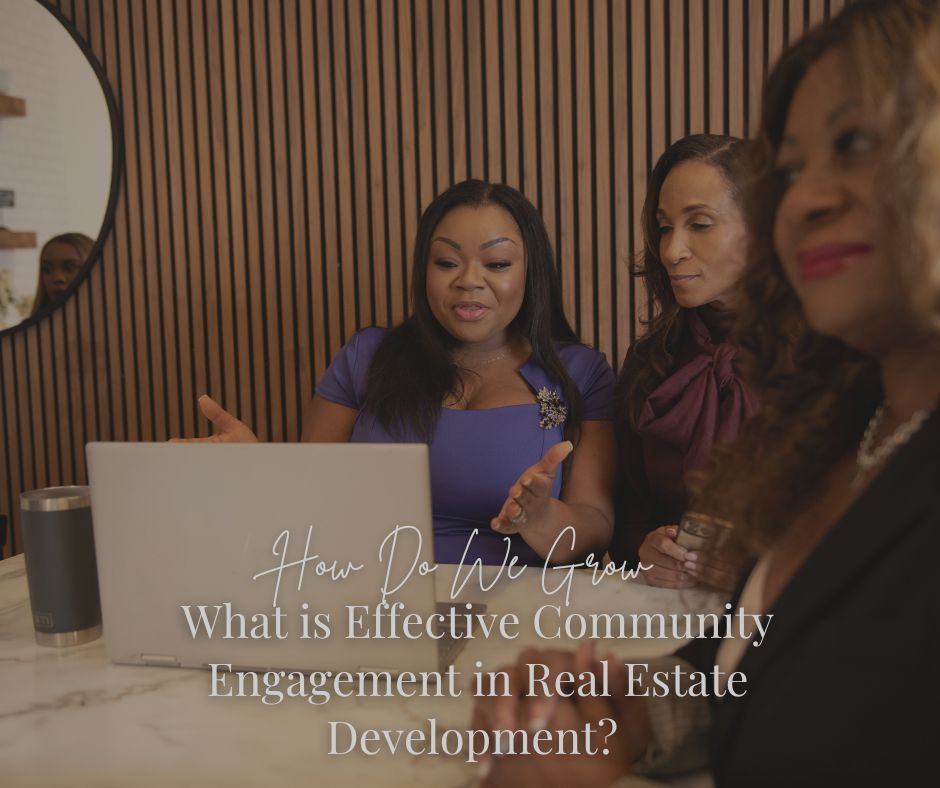
In development, “community engagement” is one of those phrases that gets used often, but not always practiced well.
Too many times, it looks like a presentation. A developer shows up, walks through plans, answers a few questions, and considers the job done.
That’s not engagement. That’s just showing up. Or, they have a couple of meetings, but are unwilling to adjust to the existing community’s concerns.
If we are serious about building communities that are strong, inclusive, and sustainable, especially when we are talking about affordable housing, workforce housing, and missing middle development, we have to approach this differently.
For me, community engagement starts with a commitment. I am committed to responsible, thoughtful investments and developments that complement existing communities, fill real gaps, are placed in an appropriate location, and allow those communities to grow stronger. Not just physically, but economically and socially. That means creating space for people across income levels and life stages to live and thrive.
That kind of work cannot be done from the top down.
Start From the Ground Up
The most effective developments are not driven solely by spreadsheets or site plans. They are shaped by people.
That means taking a grassroots approach. It means understanding what a community actually needs, not what we assume it needs or where we think it should go. It also means being willing to combine real, on-the-ground feedback with proven best practices and innovative thinking.
There is a balance there. You have to respect the lived experience of the community while also bringing forward solutions that are grounded in theory, data, and long-term impact.
When those two things come together, you get better outcomes.
Not Everyone Needs to Agree
One of the most important parts of this process is being comfortable with disagreement.
There is real value in having different perspectives at the table. In fact, if everyone agrees too quickly, that should raise concern. Because what you may be looking at is not alignment, it is groupthink.
Groupthink creates blind spots. And in development, blind spots can cost you time, money, and trust.
You have to be willing to hear the voices that challenge your ideas. The ones that ask hard questions. The ones that don’t immediately support what you are proposing.
That is where the work actually begins, and a more successful project starts.
Listen to the “No”
In sales, we are taught that objections are part of the process. You do not avoid them, you prepare for them and work through them.
Development should not be different.
When a community pushes back, that is not a signal to shut down the conversation. It is an opportunity to understand concerns, identify risks, and strengthen the project.
Too often, people say, “Don’t listen to the naysayers, the nimbys, as they call it.” I do not agree with that. You should listen carefully. Then you should do the work to address what can be addressed and be clear about what cannot.
The nimbys are, more often than not, the very same community that has volunteered and built that community back to what it is over decades and decades of volunteer work. To dismiss their concerns is short-sighted; they should feel heard and adjustments should be made.
That is how you move a project forward with integrity.
What Real Community Engagement Looks Like
Real community engagement is not a single moment or two. It is a process.
It starts with listening and continues with dialogue. And it requires a willingness to adjust.
It looks like:
- Multiple conversations, not just one meeting
- Honest feedback, not controlled messaging
- Thoughtful revisions, not rigid plans
- Transparency from start to finish
- In line with the community, not the proforma
It is not about getting everyone to agree; that is not realistic. But it is about creating a process where people feel heard and where the final outcome reflects both the vision of the development and the voice of the community.
Building With Communities
At the end of the day, development is not just about infrastructure and constructing buildings. It is about people, it is about legacy and it is about how communities evolve over time.
If we want to build places that truly thrive, we have to move beyond checking boxes and start doing the work of real engagement, which requires change.
That means listening more and collaborating more. And being willing to sit in uncomfortable conversations long enough to get to better solutions.
Because the goal is not just to build communities. The goal is to build with them.
If you are a developer, investor, or community leader, take a moment to reflect:
Are you presenting to communities or truly engaging with them?
The difference will shape not just your project, but the future of the communities you serve.
If you’re working on a development or considering one, and want a thoughtful, community-driven approach, I’d love to connect. I’m always open to development and co-development opportunities that are rooted in purpose and impact. Let’s start the conversation.